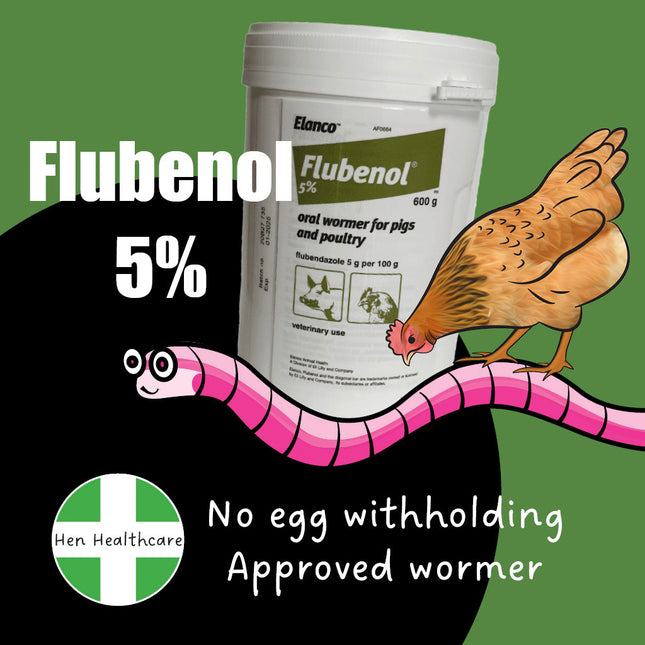
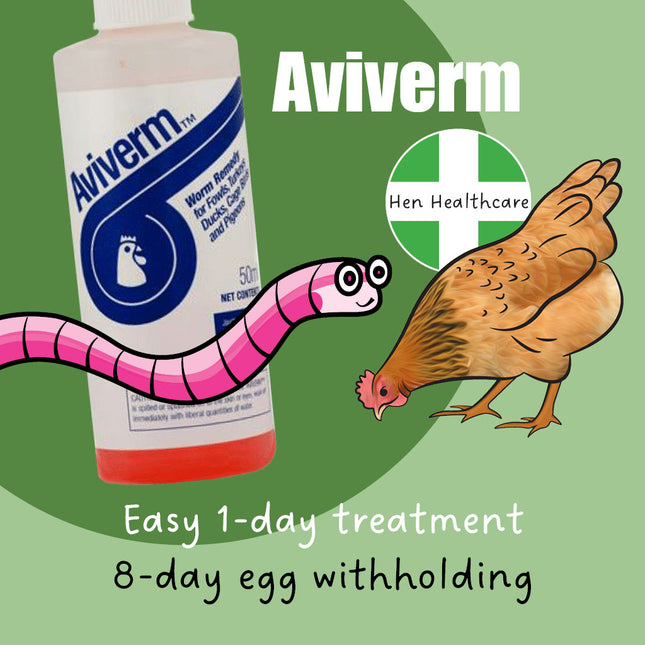
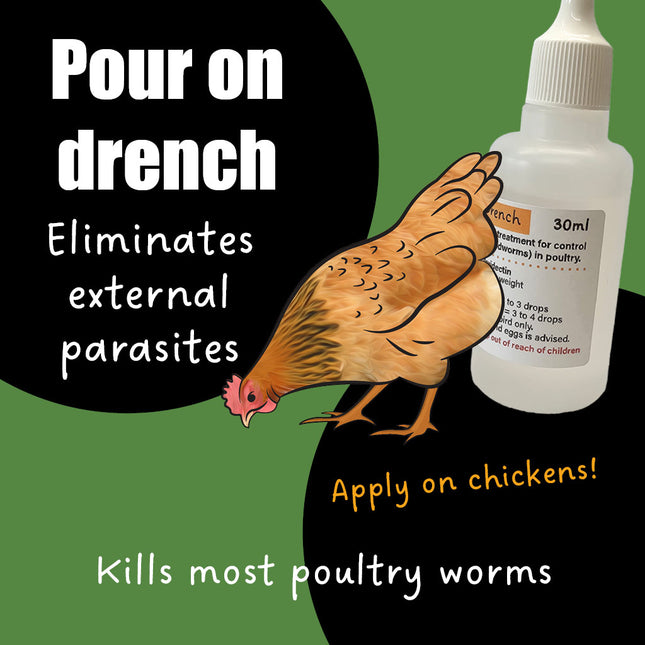
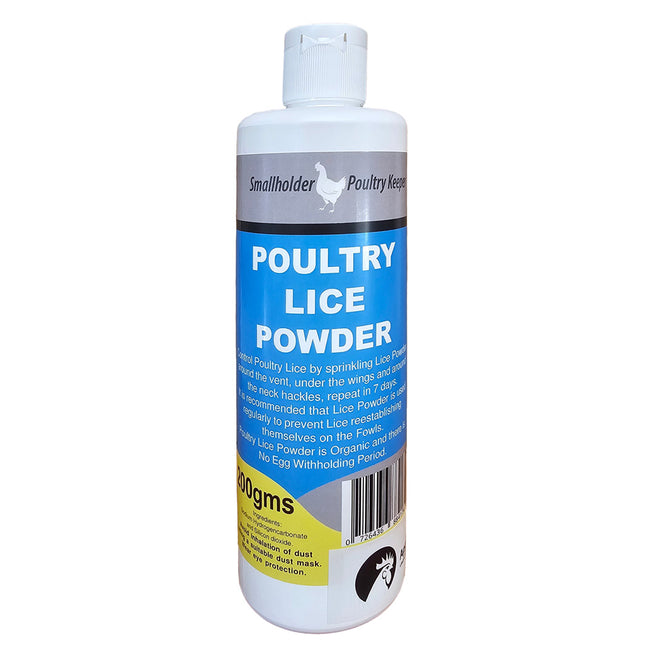
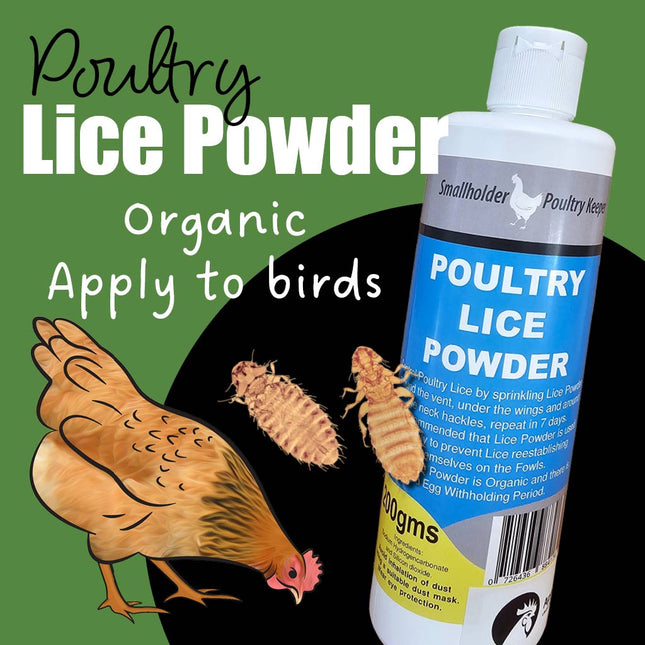
This broad-spectrum wormer has no withholding period for eggs.
Yes, you can keep eating the eggs! 😊
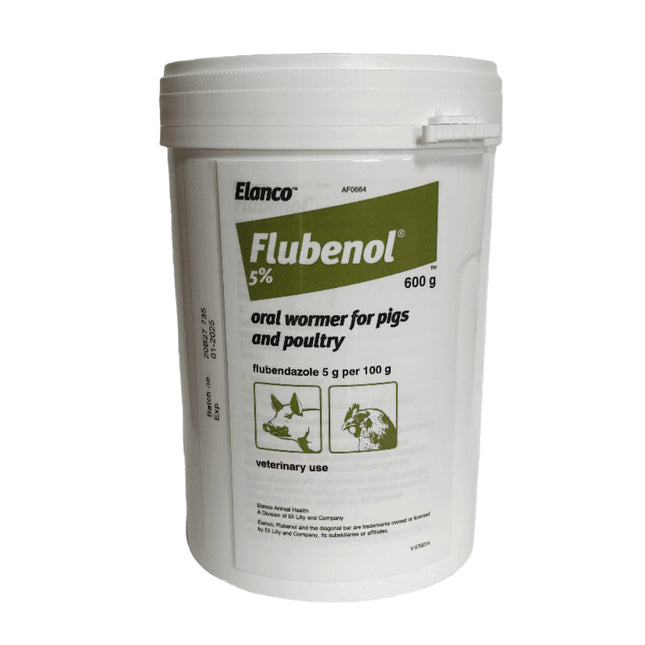
Flubenol™ 5% contains flubendazole, a broad-spectrum anthelmintic with high efficacy against all gastrointestinal worm species that commonly occur in poultry. It is effective against roundworms (Ascaridia galli, Heterakis gallinarum, Capillaria spp., Amidostomum anseris and Trichostrongylus tenuis), gapeworm (Syngamus trachea) and tapeworms (Raillietina sp.). Registered in New Zealand for use on poultry.
Dosage
Formulated to use in commercial feed production, but can be used to treat smaller backyard poultry flocks. To treat your flock, mix the powder thoroughly into the dry feed and feed it for flock for seven consecutive days. It needs to be well mixed through the pellets or dry mash. (Do not just sprinkle on top!)
30mg/kg (standard dose)
60mg/kg (for tapeworm treatment)
Flubenol can be used to treat chickens, turkeys, geese, partridges and pheasants. Do not use this product to treat pigeons or parrots.
Important | Get dosage correct & mix well
1) Follow the product instructions exactly (species, dose, method, frequency)2) Mix well (Uneven distribution can reduce effectiveness)
Directions for Use:
Calculate what 1 hen eats daily (look on the label on your feed sack)
Count the number of hens in your flock (treat everyone)
Multiply the number of hens by the daily ration for one hen
This total indicates how much feed your flock eats in a day
Multiply this number by seven (7 days of treatment)
This total is the amount of feed you need to medicate for the treatment period
Dose exactly - 30mg Flubenol to every 1kg of feed
Empty and clean all feeders
Feed medicated feed for 7 consecutive days
On the eighth day, remove any medicated feed and empty
Replace with non-medicated, fresh feed
For best results, we recommend sanitising/ cleaning your hen house at the same time using Poultry Safeguard.
For more info on deworming your flock read here.
Repeat Treatment within the PPP of the Identified Worm
Follow-up TreatmentAll poultry worms have a life cycle of between 2 to 7 weeks. It is critical to break this life cycle, so a repeat treatment should be administered within the pre-patent period of the worm (PPP). The PPP is the time period in days from worm egg ingestion by the chicken until the adult worm starts producing eggs in the chicken and sheds these eggs into the environment. When dealing with specific problem worm species, we always consider the PPP of the worm in question, because you want to keep your Flubenol treatment interval just shorter than this time period, so that you effectively prevent further contamination of the environment with worm eggs, and thereby continue the infective cycle.So, for instance, with a normal large roundworm (Ascarid) infection, a longer treatment interval of around 5-6 weeks is what we suggest (the life cycle or PPP of this worm species is the longest of all the commonly found poultry worms). However, with Gapeworm, the PPP is around 2-3 weeks. So, to effectively control the burden for this worm species, we recommend following up with another treatment 2 weeks after completion of the first.We recommend doing a follow-up treatment of Flubenol within the PPP for the worm you are treating.
The good news is no withholding period for eggs and meat for poultry.
Symptoms following overdosing: Flubenol 5% is non-toxic; even considerable overdosing does not produce side effects. In poultry, even three times the highest dose for seven days had no negative effects on egg production, egg quality, hatching results and growth of offspring.Treatment with Flubenol can only be effective if the hygiene of pig pens and poultry housing is observed.
Available in a 600g tub and in smaller sachets for treating smaller flocks.
Treatment for Pigs
Flubenol is effective against the mature and immature larvae and eggs of the following species of worm: Large Roundworm, Red Stomach Worm, Nodular Worm Lungworm, Threadworm and Whipworm.
Individual treatment: (Single administration)Add 1 g of Flubenol for each 10 kg bodyweight onto the finished feed. (This is equivalent to 5 mg of flubendazole per one kg bodyweight). One 13 g measuring spoon treats one 130 kg sow.
An easy way of administering the dose is to add it to a buttered bread roll and feed it to your pig.
Treat twice a year unless recommended otherwise by your veterinary surgeon. Pigs brought onto the premises should be treated on arrival and before mixing with other animals. Animals must not be slaughtered for human consumption within 7 days of treatment.
Read more less