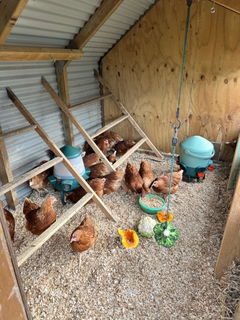
Got Red Mite in Your Hen House? These products will help...

Poultry External Parasites

11 products

  • Poultry Lice Powder Poultry lice powder organic

    Poultry Lice Powder 200gm

    Very effective for treating poultry lice. Control lice on your poultry by sprinkling Poultry Lice Powder around the vent, under the wings and around the neck hackles. Repeat treatment within seven days. It may be necessary to re-dose for severe infections. It is recommended that Poultry Lice Powder be used regularly to prevent lice from re-establishing themselves on your birds. Avoid inhaling dust by using a suitable dust mask. Wear eye protection. Instructions: Repeat every 3-4 days for 2-3 weeks. Poultry Lice Powder is organic No egg withholding period Ingredients: Sodium Hydrogen Carbonate and Silicon Dioxide. ℹ️ Learn more FACT SHEET: Chicken Health – Lice - identify and treat lice in your flock Chicken Health 101 - a complete guide to keeping your flock healthy Blog: Do My Chickens Have Lice? - how to identify and treat lice in your flock Shop Poultry Products for External Parasites - browse our full range of products for treating external parasites

    $21.95

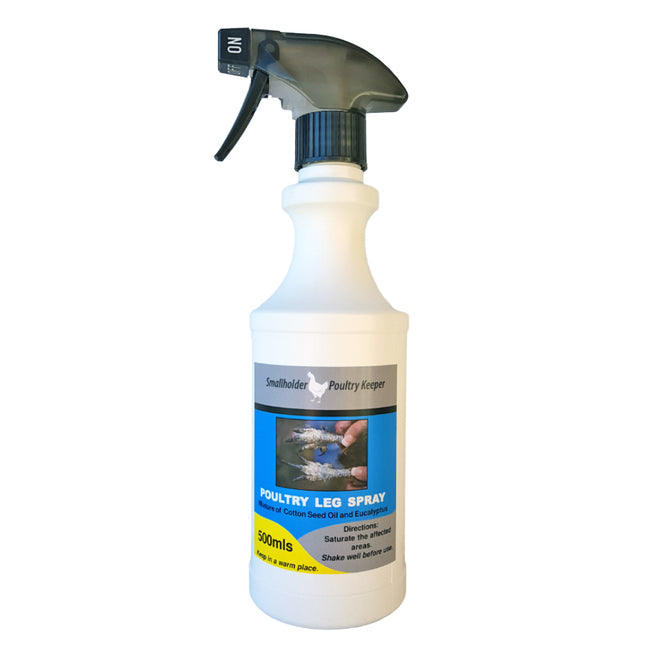
  • Scaly Leg Spray 500ml Poultry Leg Spray for scaly leg mite

    Scaly Leg Spray 500ml

    54 reviews

    Very effective organic treatment for poultry scaly leg mite. This treatment is totally organic. A mixture of Cottonseed Oil and Eucalyptus. Instructions Spray oil on legs, avoiding the feathers. Saturate the affected areas. "Poultry Leg Spray" works by suffocation. Gently massage the legs, ensuring all areas are covered. Repeat every 3-4 days for 3 to 4 weeks. Do not pick off the scale debris, as it can cause bleeding. The chickens will help by pecking the debris off the leg themselves. In cases where a chicken's scales are lost, they will not regrow. Even if your other chickens do not have signs of Scaly Leg Mites, it is recommended that you treat them as well so that these Scaly Leg Mites do not establish themselves in your flock. It is contagious. Check their legs regularly throughout the year. There is no egg-witholding period. Cleanliness and sanitary measures around the chicken coop are in order because the mites can live for long periods in cracks and crevices without feed and water. Please store the bottle at room temperature and best used when the contents is warm. If it is too cold, the liquid will not move through the sprayer. Do Your Chickens Have Scaly Leg Mite?Scaly legs on chickens are caused by a parasitic mite (Knemidocoptes mutans) that burrow under the scales on the chicken's legs. The damaged tissue weeps, which is what these mites feed on. Signs and Symptoms Raised scales on the legs. Crusty legs. Lameness (severe cases). Can also be found on the comb and wattles. In the early stages of the infection, the chicken will have mild irritation. It takes several months of infection before the scales on the legs start to lift. Repeat application is recommended. You should treat all of your birds even if only one bird has scaly legs, as scaly leg mite is very contagious and it is highly likely that all of your birds will have the mite.Scaly foot is a bird ailment that is common among caged birds and also affects many other bird species. It is caused by mites in the genus Knemidocoptes which burrow into the bird's flesh. The tunnels made by the mites within the skin cause dermatitis and scaly lesions. Scaly face is caused by the same mite responsible for scaly foot and other related mites cause depluming. The condition is transmitted from one bird to another by direct prolonged contact. ℹ️ Learn more FACT SHEET: Chicken Health – Scaly Leg Mites - identify and treat scaly leg mite in your flock FACT SHEET: Chicken Health – Lice - identify lice on your birds and how to treat them effectively Chicken Health 101 - a complete guide to keeping your flock healthy Blog: What are Scaly Leg Mites? - everything you need to know about scaly leg mite in chickens Blog: Do My Chickens Have Lice? - how to spot and treat lice in your flock Shop Chicken Healthcare - browse our full range of poultry health products

    $29.95

  • RX for Parasites 250g RX for Parasites

    RX for Parasites 250g | Safe for Small Animals & Birds

    2 reviews

    Safe for small animals and caged birds. Less toxic than table salt Odourless & Non-staining Eradicates pests physically, not chemically Safe for all caged animals - rabbits, guinea pigs and caged birds The uniquely sized particles pass through the exoskeleton blocking the stomach tract and simply dehydrates. The pest can not build an immunity to the product therefore it works long term. Due to the Milling process, RX becomes negatively charged which keeps the product in the environment long term for continued effectiveness Spray RX Powder onto pet bedding, sleeping areas and the surrounding environment. DO NOT apply directly to animals. ℹ️ Learn more FACT SHEET: Chicken Health – Lice - identify and treat lice in your flock FACT SHEET: Chicken Health – Mites - understand red mite behaviour and how it affects your flock's health Chicken Health 101 - a complete guide to keeping your flock healthy Blog: Do My Chickens Have Lice? - how to identify and treat lice in your flock Shop Poultry Products for External Parasites - browse our full range of products for treating external parasites

    $36.00

  • Appletons Pour On Drench 30ml dropper bottle Pour-on Drench Appletons

    Pour-on Drench 30ml

    65 reviews

    Very effective for treating poultry lice. Used with great results in poultry circles as a reliable treatment for most internal and external parasites. Generally used for the treatment of poultry lice and scaly leg mite, but will also kill any red mites that try to suck off your chicken. It is a topical treatment applied directly to the skin of the bird. It is approved for use on other farm animals but has not been officially approved for use on poultry, hence the recommended 10 day withholding period for eggs (and 63 in NZ for meat).This little bottle will treat a good number of birds.Dosage rate is 0.1ml per 1kg live body weight.Approximately 60 treatments. (calculated on 60 brown shavers that weigh 2.5kg each )Available in a dropper bottle with a nozzle and cap for handy dosing. Helpful Notes. What are you treating your birds for? Worms? We recommend using an approved wormer for treating worms in poultry. Our recommended choice for laying birds is Flubenol, as there is no withholding period for eggs. If treating birds that are not laying then Aviverm is easier to dose. Please note that with Aviverm, there is an 8-day withholding period for egg consumption. If using pour-on drench, please note it does not kill all types of internal worms. We recommend following up treatment within the prepatent period of the particular worm you are treating for. Lice? If you are treating for external parasites, eg, a one-off treatment usually does the trick; however, if not all birds are treated and the hen house is not thoroughly cleaned (disinfected), then birds can reinfest quickly. For best practice, we recommend checking birds after 7 to 10 days and repeating the treatment as lice eggs can hatch in this period of time. We generally inspect (physical health check) our birds 2 to 4 times a year (usually when the seasons change) and treat them accordingly for lice. We find that the pour-on drench, when dosed correctly, works brilliantly for lice control. Important Considerations. Off-Label Use: Cydectin is approved for use in other farm animals like cattle and sheep, but does not have an official, scientifically tested withholding period for poultry specific to the label. The recommended periods for poultry are derived from New Zealand's default withholding periods for unregistered veterinary medicines in birds, ensuring human food safety. Active Ingredient Accumulation: The active ingredient, moxidectin, is highly lipophilic (fat-loving) and accumulates in fatty tissues, including the egg yolk, which causes residues to persist for a longer period. Correct Dosage: It is crucial to use the correct dosage (applied to the skin, such as under the wing or on the back of the neck). Egg Management: Eggs laid during the withholding period should not be eaten or fed back to the flock, as this can reintroduce the chemical into the birds' systems and prolong the withdrawal period. They can, however, be used for incubation. Don't feed them to other animals, such as dogs, as residues may affect them too. Poison. Keep away from children. Please note this is a liquid and we cannot slip it into a courier satchel - it needs to be sent in a box. ℹ️ Learn more FACT SHEET: Chicken Health – Mites - understand red mite behaviour, signs of infestation, and treatment options FACT SHEET: Chicken Health – Lice - identify lice on your birds and how to treat them effectively FACT SHEET: Chicken Health – Scaly Leg Mites - identify and treat scaly leg mite in your flock FACT SHEET: Chicken Health – Worms - identify worm species, symptoms, and how to break the worm life cycle Chicken Health 101 - a complete guide to keeping your flock healthy Blog: Should I Be Worming My Chickens? - practical guidance on when and how to worm your flock Shop Chicken Healthcare - browse our full range of poultry health products

    $26.00

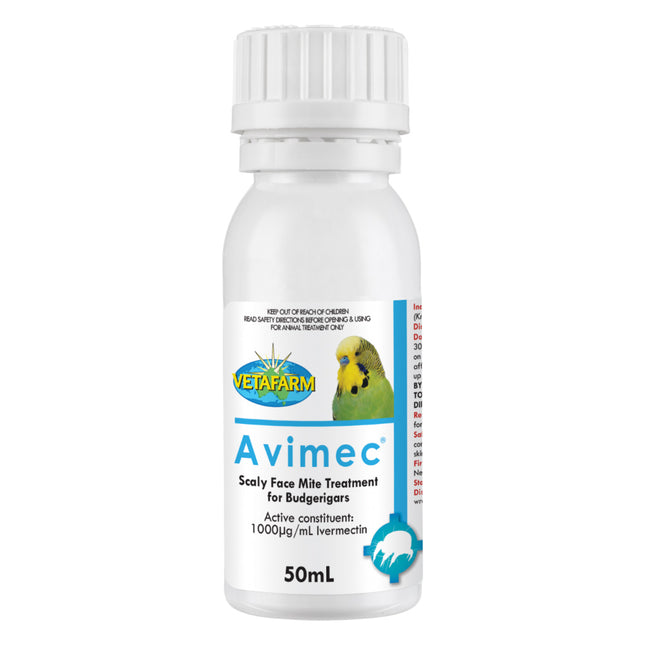
  • Vetafarm Avimec 50ml Vetafarm Avimec 50ml

    Avimec 50ml | Vetafarm

    3 reviews

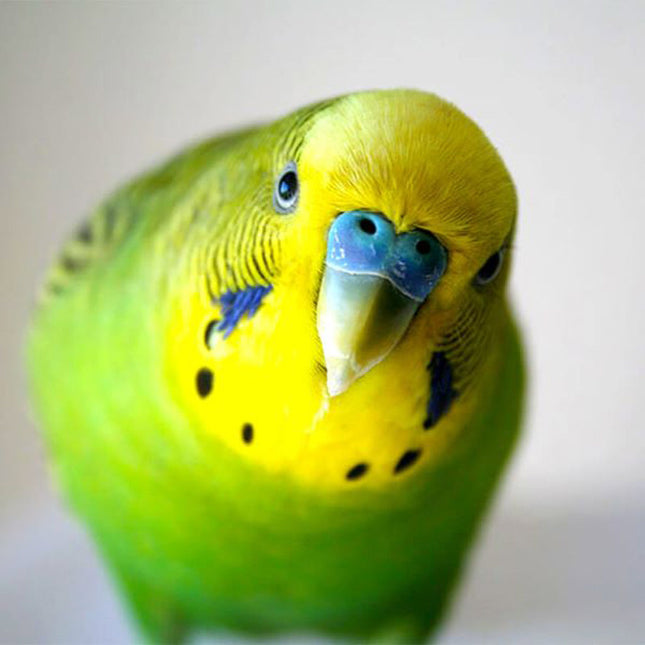
    Treatment for scaly face mites on budgies. BB 17/02/2027 Avimec is a topical 'drop-on' liquid for the treatment of Scaly Face Mite (Knemidokoptes pilae) in budgerigars. This Solution is also safe to use to treat chickens for the treatment of biting insects, including Red Mites and fleas.Active constituent: 1000ug / mL lvermectin. Key features: Safe and highly effective. Easy administration; the bottle includes a drop delivery system. Safe to use in conjunction with food additives and supplements and with oral medications. Directions: For external use only. Dosage and administration: Birds less than 30g body weight: apply 1 drop. Birds between 30-60g body weight: apply 2 drops. Repeat application weekly for three doses. Place drops on an unfeathered area of skin, on the thigh or under the wing – DO NOT apply directly to the affected area as this may irritate. Best applied using a syringe or dropper. Treat all birds in the aviary. Full recovery may take up to 6 weeks. BY LAW THE USER MUST TAKE DUE CARE, OBTAINING EXPERT ADVICE WHERE NECESSARY, TO AVOID UNNECESSARY PAIN AND DISTRESS WHEN USING THE PRODUCT OTHER THAN AS DIRECTED ON THE LABEL. Restraints: This product must not be used on any animal producing or intended to produce food for human consumption. ℹ️ Learn more FACT SHEET: Chicken Health – Mites - understand red mite behaviour, signs of infestation, and how to treat your flock Chicken Health 101 - a complete guide to keeping your flock healthy Health | Budgies - keeping your budgie happy and healthy Blog: Red Mite in Poultry Housing 😡 What To Do - practical steps for tackling a red mite infestation Shop Poultry Products for External Parasites - browse our full range of products for treating external parasites

    $49.00

  • Appletons De-Mite Powder available in 350g, 1kg, 5kg De-Mite Powder Appletons

    De-Mite Powder | Appletons

    81 reviews

    For long-lasting residual control of red mites and other external parasites in poultry housing. Organic powder treatment, when used regularly in poultry housing, acts as a deterrent for red mites. 100% natural food-grade Diatomaceous Earth Can be used safely in organic systems Works well as a preventative No withholding period for meat or eggs How it works Apply (dust) on roosts and nesting areas in poultry houses. The mites will crawl through the powder (silica) to reach the birds. The powder (silica) scratches the red mites' waxy outer covering of their exoskeletons, causing them to dehydrate and die slowly. Available in 350g, 1kg and a bulk 5kg. How to use First sanitise the hen house with Poultry Safeguard Concentrate or Smite Concentrate, Then, when surfaces are dry, apply the Appletons De-Mite Powder. Using a gloved hand or our handy powder applicator sprinkle/apply to roosts and in nest box bedding. Apply to floor litter if birds huddle/sleep on the floor at night Dust Appletons De-Mite Powder into all the corners and timber joins around the house, roosts, and nest boxes. We apply it weekly in our hen houses and coops to keep on top of mites. It can also be effectively used in small amounts in poultry dust bowls/baths to aid with external parasite control. Ongoing MaintenanceRegularly (weekly) dust roosts and nest boxes, especially in the warmer months. Especially between coop cleans. This will help to deter any red mites. This is the best way to keep on top of them. ℹ️ Learn more FACT SHEET: Chicken Health – Mites - understand red mite behaviour, signs of infestation, and how to treat your flock FACT SHEET: Chicken Health – Lice - identify lice on your birds and how to treat them effectively Chicken Health 101 - a complete guide to keeping your flock healthy Blog: Red Mite in Poultry Housing 😡 What To Do - practical steps for tackling a red mite infestation Blog: Dissecting Diatomaceous Earth - how diatomaceous earth works and why it's effective against mites Shop Red Mite and Coop Care Products - browse our full range of coop cleaning and mite control products

    $22.95 - $96.00

  • Appletons Poultry Safeguard Concentrate range Poultry SafeGuard Appletons

    Poultry Safeguard Concentrate | Appletons

    147 reviews

    Our top-selling coop cleaner. Voted the best solution to keep on top of red mites in poultry housing. The ultimate solution to a mite-free hen house. No other cleaner does the job better! High-performance cleaner, sanitiser and odour neutraliser. Powerful disinfectant kills micro-organisms, bacteria and viruses. Dissolves and eliminates red mite on contact. Economical - 1L makes up to 50L solution. No egg withholding period. Can also be safely used to disinfect your brooders and incubators. Available in 500ml, 1L and 5L concentrate bottles. Suitable for all animal housing. Understanding Red Mite Red mites reproduce rapidly, especially in warmer weather. These nasty critters don't live on your chickens. They live and hide in the framework of your coop, roosts and nest boxes, coming out at night to feed on your birds' blood. As a result your chickens become stressed, suffer from anaemia, experience reduced egg production, and may even die if not treated. Managing red mites can be incredibly difficult, which is why Appletons developed Poultry Safeguard. This New Zealand-made concentrate dissolves mites on contact and acts as a powerful, economical disinfectant that kills bacteria, viruses, and odours in coops. Poultry Safeguard is a non-toxic blend of high-foaming surfactants, sequestrates, alkaline builders, and quaternary ammonium compounds (QACs). It effectively dissolves waxy accumulations and targets a range of microbes and micro-organisms, including mildew, moulds, fungi, Avian Influenza Virus, Avian Infectious Bronchitis, and Newcastle's disease. Instructions Do not pre-wash or water blast your coop or hen house before using this product.Remove all poultry from the treatment area. Do not spray directly onto birds. Remove all floor litter, droppings and nest box material from the house. Scrap off any debris from perches and walls. For best results, ensure roosts are removable. Mix up solution to recommended dose in a backpack sprayer or pressured hand sprayer. Apply mixed solution directly onto dry surfaces. Thoroughly spray all surfaces, including cracks, joints, framing, and crevices. Pay special attention to perches (roosting areas) and nest boxes (laying areas). Leave to air dry and then rinse off with potable water (water suitable for drinking). The rinse-off is optional for timber housing. When the house is dry, dust perches and nest boxes with Appletons De-Mite Powder. (The two-pronged approach is best when you are treating for red mites) Replace with fresh floor litter and nesting box material. Your coop or hen house is now ready to let birds back inside. Repeat the treatment in 5 to 7 days if you are experiencing red mites. This will treat any juvenile mites that have hatched since the first treatment. Repeat spraying will break the breeding cycle and help to prevent re-infestation. In severe infestations, repeat treatment at the higher dose every 5 to 7 days until under control. Ongoing MaintenanceRegular cleaning, especially in the warmer months, with a maintenance dose will keep housing free of disease and red mite under control. ℹ️ Learn more FACT SHEET: Chicken Health – Mites - understand red mite behaviour, signs of infestation, and how to treat your flock Blog: Red Mite in Poultry Housing 😡 What To Do - practical steps for tackling a red mite infestation Chicken Health 101 - a complete guide to keeping your flock healthy Blog: Take a Peek in your Chicken Coop 👀 - a handy guide to spotting early signs of trouble in your coop Shop Red Mite and Coop Care Products - browse our full range of coop cleaning and mite control products

    $36.00 - $124.00

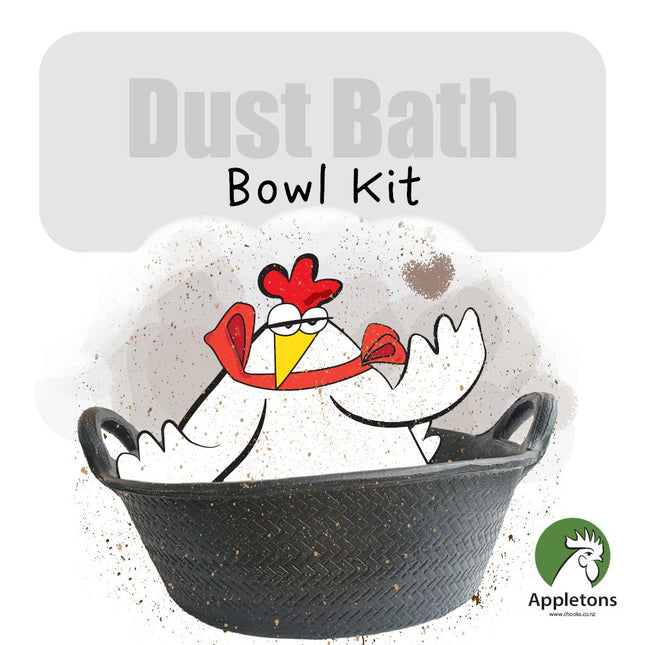
  • Appletons Dust Bath Bowl Kit Offer your chickens a dust bath kit from Appletons

    Dust Bath Bowl Kit | Appletons

    6 reviews

    All chickens get clean by getting dirty 😊 Just like a human bathtub, a dust bath to chickens is all about cleanliness. It's not only chickens who like to hit the dirt – you may spot other birds such as sparrows and blackbirds taking a dust bath too. The dust or sand absorbs surplus moisture and oils on the skin. A dirt bath maintains the water resistance of the outer feathers of a chicken. It also deters parasites such as mites and lice by coating the insects' breathing pores or simply driving them away. Dust bathing is an important part of keeping chickens healthy and clean. Once fully coated in dust or sand, the chicken will have a shake-down, just like a dog after a dip in a river. A quick preen of the feathers, and they'll be all done and dusted. Literally. In addition to these physical benefits, dust-bathing is also thought to be mentally rewarding for hens. It helps them relax, and is a way of socialising too. Keep your hens mite and lice free with an Appletons Dust Bath Kit. Your Appletons Dust Bath Kit includes: Recycled rubber dust bath bowl with carry handles – heavy duty and flexible 1 cup calcium carbonate + REFILL 1 x 1.5kg fine sand + REFILL 1 cup wood ash + REFILL A dash of medicinal herbs (can be lavender, rosemary, lemon balm or mint) + REFILL Dimensions: 56cm including handles, bowl diameter at top 50cm, height 22 cm. We have supplied all you need except for the dry dirt, which is best sourced from your own backyard. Make sure it is dry, fine and friable. Dust Bath Bowl is best placed undercover or out of the rain on wet days. Everything your flock needs for two complete dust baths! Refills available ℹ️ Learn more Blog: How To Make A Dust Bath For Your Chickens - step-by-step guide to setting up the perfect dust bath FACT SHEET: Chicken Health – Mites - understand red mite behaviour and how to protect your flock Blog: Do My Chickens Have Lice? - how to identify and treat lice in your flock Blog: Busy Hens are Happy Hens - ideas for keeping your flock entertained and thriving Blog: Appletons Guide to Keeping Healthy Hens 😊 - everything you need to know about keeping a happy, healthy flock

    $95.00

  • Appletons Dust Bath Refill Kit Chicken dust bath refill kit Appletons

    Refill For Dust Bath Bowl Kit | Appletons

    5 reviews

    Chickens love to dust bath! Your Appletons Dust Bath Refill Kit includes: 1 cup calcium carbonate.1 x 1.5kg Fine Sand.1 cup Wood Ash.A dash of Medicinal Herbs (depending on availability can be lavender, lemon balm or mint). All chickens get clean by getting dirty 😊Just like a human bathtub, a dust bath is all about cleanliness. It's not only chickens who like to hit the dirt – you may spot other birds such as sparrows and blackbirds taking a dust bath too. The dust or sand absorbs surplus moisture and oils on the skin. A dirt bath maintains the water resistance of the outer feathers of a chicken. It also deters parasites such as mites and lice by coating the insects' breathing pores or simply driving them away. Dust bathing is an important part of keeping chickens healthy and clean. Once fully coated in dust or sand, the chicken will have a shake-down, just like a dog after a dip in a river. A quick preen of the feathers, and they'll be all done and dusted. Literally. In addition to these physical benefits, dust-bathing is also thought to be mentally rewarding for hens. It helps them relax, and is a way of socialising too.Keep your hens mite and lice free with an Appletons Dust Bath Kit. ℹ️ Learn more Blog: How To Make A Dust Bath For Your Chickens - step-by-step guide to setting up the perfect dust bath FACT SHEET: Chicken Health – Mites - understand red mite behaviour and how to protect your flock Blog: Do My Chickens Have Lice? - how to identify and treat lice in your flock Chicken Health 101 - a complete guide to keeping your flock healthy Blog: Busy Hens are Happy Hens - ideas for keeping your flock entertained and thriving

    $35.00

  • Make dusting your hen house easy with our handy powder applicator shaker Use this easy applicator for dusting with DE

    Powder Applicator

    5 reviews

    Handy powder shaker. Make dusting your hen house an easy chore with our powder applicator.Perfect for using with Appletons De-Mite Powder. Please remember to wear a face mask when cleaning your hen house and using your powder applicator.Colour may vary. ℹ️ Learn more FACT SHEET: Chicken Health – Mites - understand red mite behaviour, signs of infestation, and how to treat your flock Blog: Red Mite in Poultry Housing 😡 What To Do - practical steps for tackling a red mite infestation Blog: Dissecting Diatomaceous Earth - how diatomaceous earth works and why it's effective against mites Blog: Take a Peek in your Chicken Coop 👀 - a handy guide to spotting early signs of trouble in your coop Shop Red Mite and Coop Care Products - browse our full range of coop cleaning and mite control products

    $20.95

  • Syringe 1ml Handy syringe for dosing animals with  Coxiprol, Aviverm, Pour-on Drench available in 2ml and 5ml

    Syringe

    Handy dosing syringe. Single-use, sterile, non-toxic, non-pyrogenic latex-free Syringe. Always handy to have if administering coxiprol, aviverm or pour-on drench.  Our new 1ml syringe is perfect for tiny dose rates where you need accuracy. Please note syringes are for animal use only. 

Poultry External Parasites

How To Keep Your Flock Free of External Parasites.

Dealing with external poultry parasites (leg mites, lice) requires a combined approach: treating the birds with the approved treatment and thoroughly cleaning the coop to kill eggs. Follow up treatments are usually necessary. We offer both organic and chemical treatments.

Blog Do My Chickens Have Lice

Blog Scaly Leg Mite

Login

Forgot your password?

Don't have an account yet?
Create account