Got Red Mite in Your Hen House? These products will help...

Poultry Wormers

6 products

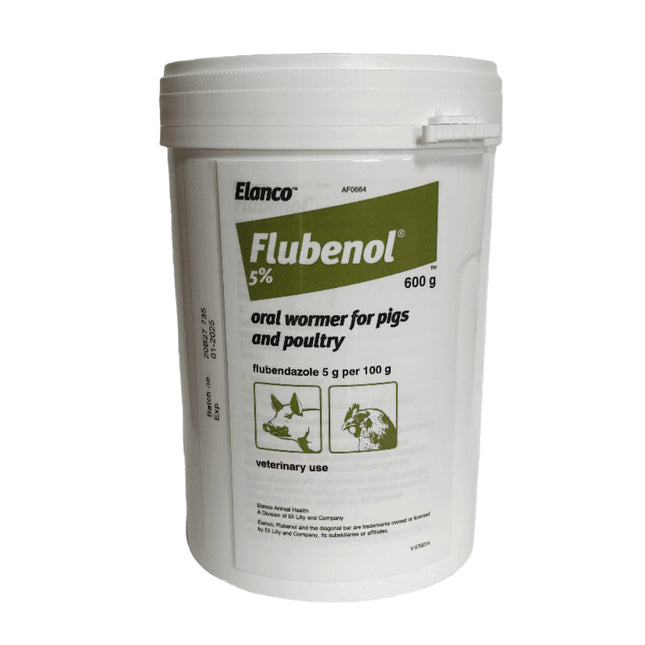
  • Flubenol 5% - Poultry and Pig Wormer Flubenol 5% approved wormer

    Flubenol 5% | Poultry and Pig Wormer

    75 reviews

    This broad-spectrum wormer has no withholding period for eggs.  Yes, you can keep eating the eggs! 😊 Flubenol™ 5% contains flubendazole, a broad-spectrum anthelmintic with high efficacy against all gastrointestinal worm species that commonly occur in poultry. It is effective against roundworms (Ascaridia galli, Heterakis gallinarum, Capillaria spp., Amidostomum anseris and Trichostrongylus tenuis), gapeworm (Syngamus trachea) and tapeworms (Raillietina sp.). Registered in New Zealand for use on poultry.  Dosage  Formulated to use in commercial feed production, but can be used to treat smaller backyard poultry flocks.  To treat your flock, mix the powder thoroughly into the dry feed and feed it for flock for seven consecutive days. It needs to be well mixed through the pellets or dry mash. (Do not just sprinkle on top!)  0.6 grams/kg Flubenol 5% (standard dose) (30ppm active ingredient) 1.2 grams/kg Flubenol 5% (for tapeworm treatment) (60ppm active ingredient) Flubenol 5% can be used to treat chickens, turkeys, geese, partridges and pheasants. Do not use this product to treat pigeons or parrots. Important | Get dosage correct & mix well 1) Follow the product instructions exactly (species, dose, method, frequency)2) Mix well (Uneven distribution can reduce effectiveness) Directions for Use: Calculate what 1 hen eats daily (look on the label on your feed sack) Count the number of hens in your flock  (treat everyone) Multiply the number of hens by the daily ration for one hen This total indicates how much feed your flock eats in a day Multiply this number by seven (7 days of treatment) This total is the amount of feed you need to medicate for the treatment period Dose exactly - 0.6 grams Flubenol 5% to every 1kg of feed  Empty and clean all feeders Feed medicated feed for 7 consecutive days On the eighth day, remove any medicated feed and empty Replace with non-medicated, fresh feed For best results, we recommend sanitising/ cleaning your hen house at the same time using Poultry Safeguard. For more info on deworming your flock read here. Repeat Treatment within the PPP of the Identified Worm Follow-up TreatmentAll poultry worms have a life cycle of between 2 to 7 weeks. It is critical to break this life cycle, so a repeat treatment should be administered within the pre-patent period of the worm (PPP). The PPP is the time period in days from worm egg ingestion by the chicken until the adult worm starts producing eggs in the chicken and sheds these eggs into the environment. When dealing with specific problem worm species, we always consider the PPP of the worm in question, because you want to keep your Flubenol treatment interval just shorter than this time period, so that you effectively prevent further contamination of the environment with worm eggs, and thereby continue the infective cycle.So, for instance, with a normal large roundworm (Ascarid) infection, a longer treatment interval of around 5-6 weeks is what we suggest (the life cycle or PPP of this worm species is the longest of all the commonly found poultry worms). However, with Gapeworm, the PPP is around 2-3 weeks. So, to effectively control the burden for this worm species, we recommend following up with another treatment 2 weeks after completion of the first.We recommend doing a follow-up treatment of Flubenol within the PPP for the worm you are treating. The good news is no withholding period for eggs and meat for poultry. Symptoms following overdosing: Flubenol 5% is non-toxic; even considerable overdosing does not produce side effects.  In poultry, even three times the highest dose for seven days had no negative effects on egg production, egg quality, hatching results and growth of offspring.Treatment with Flubenol can only be effective if the hygiene of pig pens and poultry housing is observed. Available in a 600g tub and in smaller sachets for treating smaller flocks. Treatment for Pigs Flubenol 5% is effective against the mature and immature larvae and eggs of the following species of worm: Large Roundworm, Red Stomach Worm, Nodular Worm Lungworm, Threadworm and Whipworm. Individual treatment: (Single administration)Add 1 g of Flubenol for each 10 kg bodyweight onto the finished feed. (This is equivalent to 5 mg of flubendazole per one kg bodyweight). One 13 g measuring spoon treats one 130 kg sow. An easy way of administering the dose is to add it to a buttered bread roll and feed it to your pig. Treat twice a year unless recommended otherwise by your veterinary surgeon.  Pigs brought onto the premises should be treated on arrival and before mixing with other animals.  Animals must not be slaughtered for human consumption within 7 days of treatment.

    $25.00 - $92.00

  • Aviverm Worm Remedy 50ml Aviverm Poultry Worm Remedy

    Aviverm Poultry Wormer 50ml

    7 reviews

    It's good practice to worm your hens regularly. EXP 07/2028 Active Ingredient: Levamisole Hydrochloride 24% w/v as an aqueous solutionEffective treatment for worms for chickens, turkeys, ducks, cage birds and pigeons. Aviverm™ is an anthelmintic which provides simultaneous treatment of immature and adult stages of the three most important intestinal worms: Ascaridia (roundworm) Capillaria (hairworm) Heterakis (cecal worm)  Easy to use ONE dose treatment to expel mature and immature roundworms.A ready-to-pour liquid concentrate that makes a clear solution in their drinking water. Palatable to birds of all ages. Birds should immediately resume their full growth rate and egg production. Worm-free birds mean higher egg production, faster growth rate, reduced mortality, better feed conversion, top condition and bloom, uniform batches, and fewer rejected carcasses.Registered for use on chickens in New Zealand. Monitoring your chickens' droppings is one way to keep track of their general health. If you see signs of worms in their faecal matter we recommend worming your poultry.  The withholding period for eating eggs or birds produced for meat is 7 days AFTER treatment. Directions for Use: Estimate the number of birds served by each tank and also their average weight. Using these figures, estimate their total live weight. Now estimate how much Aviverm is required at a dose rate of 1mL per 9kg live weight. Add this quantity of Aviverm to the drinking water – ensure sufficient water is available for 8 hours of normal consumption. DOSAGE RATE:1 mL per 9kg live weight (equivalent to 0.03g/kg levamisole hydrochloride) Total Live Weight  Dose (based on 1ml per 9kg live weight) 30g 0.003mL 50g 0.006mL 70g 0.008mL 90g 0.01mL 250g 0.03mL 500g 0.06mL 750g 0.08mL 1kg 0.11mL   ADMINISTRATION:For maximum efficiency, the treated water should be consumed in the shortest possible time. Withhold water from 2 hours before nightfall until morning or the lights are turned on and then supply treated water only. Flush out tanks and replace with fresh water after 8 hours, or as soon as the treated water is consumed. Broilers and other chickens raised under continuous lighting withhold water for one hour in summer or two hours in winter before supplying the treated water.Then continue as above.Aviverm is to be used as a single treatment.  Repeat doses are to be made no sooner than 21 days after the previous treatment and only after seeking advice from a suitably qualified or experienced Animal Health advisor.  FOR BEST RESULTS: Administer Aviverm in the drinkers the birds are accustomed to using and check that all the drinkers are working properly. Avoid treating on a day when normal water consumption of a flock might be reduced to a sudden drop in temperature. Do not treat in extremely hot weather. Aviverm will not affect the growth rate or egg production of the birds, nor will it affect the fertility or hatchability of eggs when used in accordance with directions. Withholding Times:Animals producing meat and offal for human consumption must not be sold for slaughter during or within 7 days of the last treatment. Eggs from treated birds must not be sold for human consumption for 6 days following the cessation of the last treatment. PLEASE READ ALL INSTRUCTIONS ON THE BOTTLE BEFORE USE. For more info please click here

    $24.00

  • Denver Meal Time fresh is best premium yolk 19% plus wormer layer pellets 20kg Worming made easy with Meal Time Fresh premium yolk + wormer pellets

    Premium Yolk + WORMER Layer Pellets | Denver Meal Time

    2 reviews

    Make worming your chickens easy with this high protein layer feed. Perfect for hens from point of lay onwards. Denver Meal Time - Fresh Is Best - Premium Yolk + Wormer Layer Pellets are a wholesome 19% protein feed providing balanced nutrition for healthy hens producing great tasting, fresh eggs with golden yolks. Flubavet is added as part of the worm treatment for your birds.  Formulated as a source of energy, protein and essential vitamins & minerals for healthy hens and great tasting eggs with golden yolks. It is recommended to worm your birds every 3 to 6 months, and there is no withholding period for eggs or meat with this product. Feeding Suggestions: 130-175 grams per head/day. Ensure fresh water is available at all times. Feed - Fresh Is Best - Premium Yolk + Wormer Layer Pellets solely to your hens, ad-lib, for 7 to 14 consecutive days for effective deworming from point-of-lay onwards.  Provide ad-lib access to feed at all times. Your hens will eat to their requirements. Limit other feed sources for best practice. Birds will consume 130-175g of feed depending on age, breed and weight. Keep feed fresh and ensure feeding containers are kept clean. Ensure that birds have access to fresh, clean water at all times.  Once the 7 to 14 consecutive days of treatment have finished, revert to Denver Meal Time - Fresh Is Best - Premium Yolk Layer Pellets. Repeat with Fresh Is Best - Premium Yolk + Wormer Layer Pellets every 3-6 months. Typical Analysis: Protein 19% approx. May vary slightly due to grain variances. Contains or may contain ruminant protein:Do not feed to any other animal species other than those stipulated on the label. Ingredients: Selected grain and grain by-products, various plant proteins, animal protein, lucerne, minerals, molasses, vegetable oils, amino acids, vitamins and trace minerals. Flubavet is added as part of worm treatment. View Data Sheet  TOP TIP! Look for a layer feed that contains meat & bone meal (proper animal protein) rather than plant-based protein or synthetically manufactured protein. This point of difference between the two types of proteins makes a huge difference. We feed a complete, nutritionally balanced feed with a high crude protein percentage of 18 -19% to our flock. We see the results in our birds every day: top egg production, good health and very few pecking issues. It is also good to hear positive feedback from our customers once they start using our high-protein feeds containing ruminant protein. 👍 Yes, we can courierPlease note that our 20kg bags are sent in large, heavy-duty plastic bags 😊 except for local deliveries. Local courier deliveries of feed will now be sent without plastic packaging.Please recycle these where you can ♻️

    $29.00 - $47.00

  • Appletons Pour On Drench 30ml dropper bottle Pour-on Drench Appletons

    Pour-on Drench 30ml

    65 reviews

    Very effective for treating poultry lice. Used with great results in poultry circles as a reliable treatment for most internal and external parasites. Generally used for the treatment of poultry lice and scaly leg mite, but will also kill any red mites that try to suck off your chicken. It is a topical treatment applied directly to the skin of the bird. It is approved for use on other farm animals but has not been officially approved for use on poultry, hence the recommended 10 day withholding period for eggs (and 63 in NZ for meat).This little bottle will treat a good number of birds.Dosage rate is 0.1ml per 1kg live body weight.Approximately 60 treatments. (calculated on 60 brown shavers that weigh 2.5kg each )Available in a dropper bottle with a nozzle and cap for handy dosing. Helpful Notes. What are you treating your birds for? Worms?  We recommend using an approved wormer for treating worms in poultry. Our recommended choice for laying birds is Flubenol, as there is no withholding period for eggs. If treating birds that are not laying then Aviverm is easier to dose. Please note with Aviverm, there is an 8-day withholding period for egg consumption. If using pour-on drench, please note it does not kill all types of internal worms. We recommend following up treatment within the prepatent period of the particular worm you are treating for. Please read our informative blog on working chickens. Lice? If you are treating for external parasites, eg, a one-off treatment usually does the trick; however, if not all birds are treated and the hen house is not thoroughly cleaned (disinfected), then birds can reinfest quickly. For best practice, we recommend checking birds after 7 to 10 days and repeating the treatment as lice eggs can hatch in this period of time. We generally inspect (physical health check) our birds 2 to 4 times a year (usually when the seasons change) and treat them accordingly for lice. We find that the pour-on drench, when dosed correctly, works brilliantly for lice control.  Read our informative blog on treating lice. Important Considerations. Off-Label Use: Cydectin is approved for use in other farm animals like cattle and sheep, but does not have an official, scientifically tested withholding period for poultry specific to the label. The recommended periods for poultry are derived from New Zealand's default withholding periods for unregistered veterinary medicines in birds ensuring human food safety. Active Ingredient Accumulation: The active ingredient, moxidectin, is highly lipophilic (fat-loving) and accumulates in fatty tissues, including the egg yolk, which causes residues to persist for a longer period. Correct Dosage: It is crucial to use the correct dosage (applied to the skin, such as under the wing or on the back of the neck)  Egg Management: Eggs laid during the withholding period should not be eaten or fed back to the flock, as this can reintroduce the chemical into the birds' systems and prolong the withdrawal period. They can, however, be used for incubation. Don’t feed them to other animals, such as dogs, as residues may affect them too. Poison. Keep away from children.Please note this is a liquid and we cannot slip it into a courier satchel - it needs to be sent in a box.

    $26.00

  • Syringe 1ml Handy syringe for dosing animals with  Coxiprol, Aviverm, Pour-on Drench available in 2ml and 5ml

    Syringe

    Handy dosing syringe. Single-use, sterile, non-toxic, non-pyrogenic latex-free Syringe. Always handy to have if administering coxiprol, aviverm or pour-on drench.  Our new 1ml syringe is perfect for tiny dose rates where you need accuracy. Please note syringes are for animal use only. 

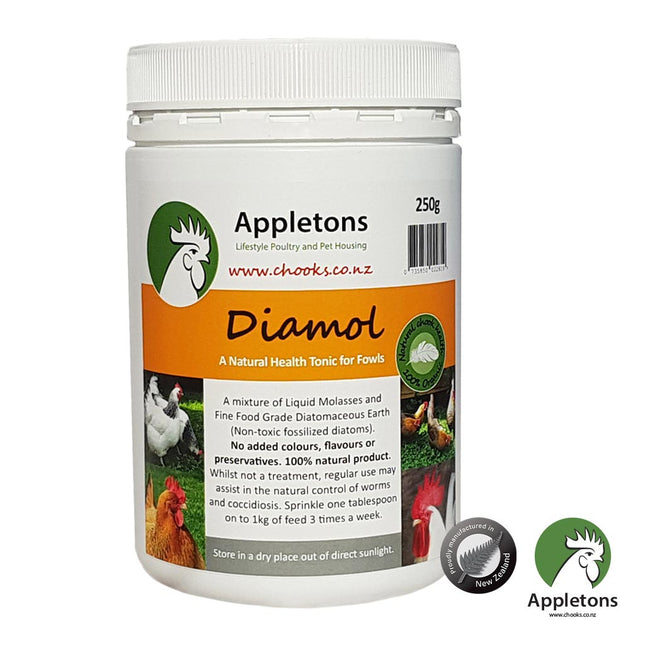
  • Appletons Diamol 250gram Diamol Natural Health Tonic for Hens by Appletons

    Diamol 250g | Appletons

    9 reviews

    A natural health tonic for chickens. It is natural pest control for worms and coccidiosis in poultry, bantams, chooks, chickens. No added colours, flavours or preservatives. A mixture of Liquid Molasses and fine Diatomaceous Earth (Non-toxic fossilized diatoms). 100% natural. Whilst not a treatment, regular use may assist in the control of worms and coccidiosis. Diamol is a blend of liquid molasses and diatomite carefully formulated in a special process which converts the molasses to a dry powder form for convenience. Available in a 250g jar. Dosage: Sprinkle one tablespoon onto 1kg of feed 3 times a week.

    $29.95

Poultry Wormers

De-worming Your Flock Regularly Is Essential.

We recommend consistent worming to preserve your flock's overall health and vitality. While worming is not complex, it must be performed accurately for effectiveness. Worms are not always visible in fecal matter; the absence of visible worms does not mean your birds are worm-free. Preventative worming is highly recommended, ideally 4 to 6 times per year. Worms can be persistent. Single doses are often ineffective due to the complex life cycles of different worm types. No single wormer is perfect. Rotate wormers to ensure comprehensive coverage against both tapeworms and roundworms. Natural remedies like ACV (Apple Cider Vinegar) and garlic can be supportive but are not approved wormers.

Best Practices for Effective Worming
Follow the exact dosage instructions. Weigh your birds to ensure accurate dosing.
Repeat the treatment 10 to 14 days later to address newly hatched worms. Only treat with one medication at a time. Avoid resistance by rotating wormers with different active ingredients. Be sure to check and follow the withholding periods for eggs or meat. Remember to thoroughly clean the coop and scrub the feeders/drinkers during and after treatment. Keep records of worming dates and products used. Support your flock's immune system with nutritional feed and supplements. If you are unsure, consider performing a Fecal Egg Count (FEC) before and after treatment to confirm the worm burden and treatment success.

Blog Should I Be Worming My Chickens


Login

Forgot your password?

Don't have an account yet?
Create account